 9 minutes
🏋️♂️ Bitcoin tests the key $70k support
Bitcoin has fallen below the $70,000 mark again, losing around 5% in two days after a short rally last week. Market analysis reveals increasing selling pressure from short-term traders, while macroeconomic uncertainties and weak spot demand are dampening near-term momentum.
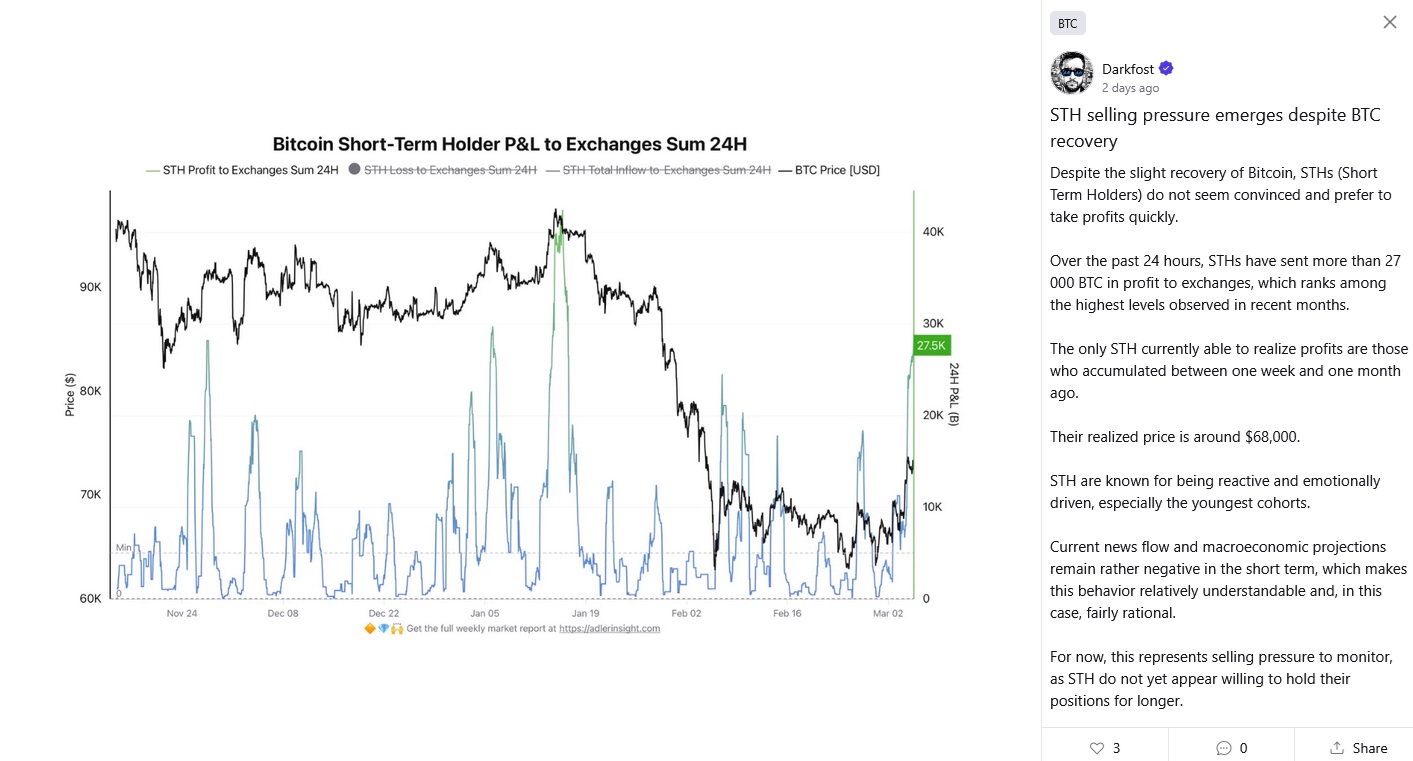
On-chain data shows short-term Bitcoin holders increasingly took profits during last week's brief rally that reached $74,000. Within 24 hours, over 27,000 BTC moved from the wallets of a specific investor group to exchanges. Meanwhile, key indicators like the cumulative volume delta (CVD) in spot and futures trading turned negative, signaling dominant sell orders. The Coinbase Premium Index, which tracks US spot demand, also lost positive momentum as Bitcoin approached $74,000.
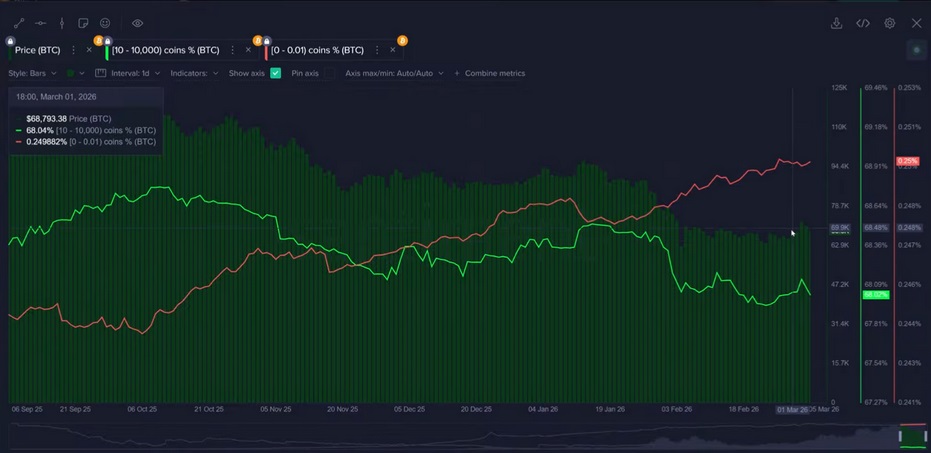
Market structure suggests the correction may continue. According to Santiment data, Bitcoin whales have sold around 66% of the coins they accumulated between $62,900 and $69,600, while smaller investors began buying more. Historically, this pattern — retail buying as large wallets sell — signals a correction phase that is not yet complete.
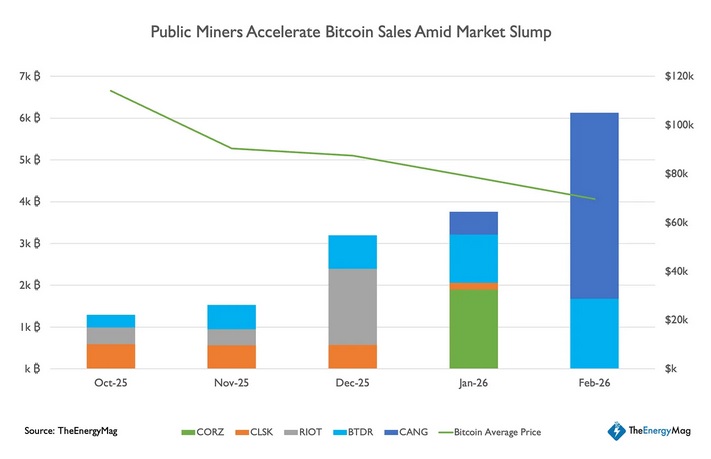
Structural factors are also pressuring the market. Public Bitcoin mining companies have sold over 15,000 bitcoins since October 2025, as declining margins and debt burdens are forcing them to start liquidating their reserves. The US dollar has strengthened significantly, with the dollar index rising from 96.6 to 99.4 points in three weeks, typically weighing on risk assets. However, Bitcoin shows some resilience, with its correlation to the Nasdaq recently declining.

In addition to these market mechanisms, geopolitical risks are playing an increasingly important role. Former BitMEX CEO Arthur Hayes warns that financial markets may be underestimating the risk of a prolonged Middle East conflict. Escalation could worsen inflation and volatility through rising energy prices, potentially leading to an expansion of global liquidity in the long term.
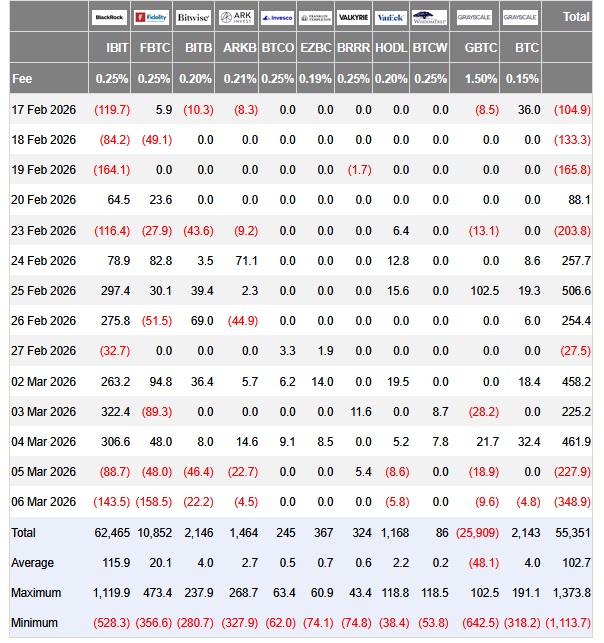
Despite current weakness, long-term demand remains visible. Spot Bitcoin ETFs recorded approximately $1.5 billion in inflows within a week. Many short-term analysts view the $67,000-$68,000 zone as a crucial support, while a sustained trend reversal would likely require a breakout above $75,000.
💡 Current data reveals a classic late-cycle pattern: short-term traders taking profits, miners selling reserves, and retail investors entering the market. Focus is shifting to macro risks and geopolitical developments. While strong short-term volatility remains possible, sustained institutional demand suggests that what we are seeing now is a structural consolidation rather than a fundamental demand collapse.
🤖 How AI could fast-track Ethereum's development
Ethereum could implement its technical roadmap much faster than previously expected. According to co-founder Vitalik Buterin, artificial intelligence is now significantly accelerating the development of key protocol components:
In his tweet, he referred to an experiment in which an Ethereum developer used AI to prototype an implementation of the Ethereum roadmap to 2030 within a few weeks. This so-called "vibe coding" uses AI models to automatically generate large portions of code.
However, Buterin emphasized that such systems still pose significant risks. The generated code likely contains critical errors or incomplete implementations. Nevertheless, the development clearly demonstrates how much protocol development speed could increase. In the future, developers could use productivity gains to perform additional security checks, tests, and formal verifications.
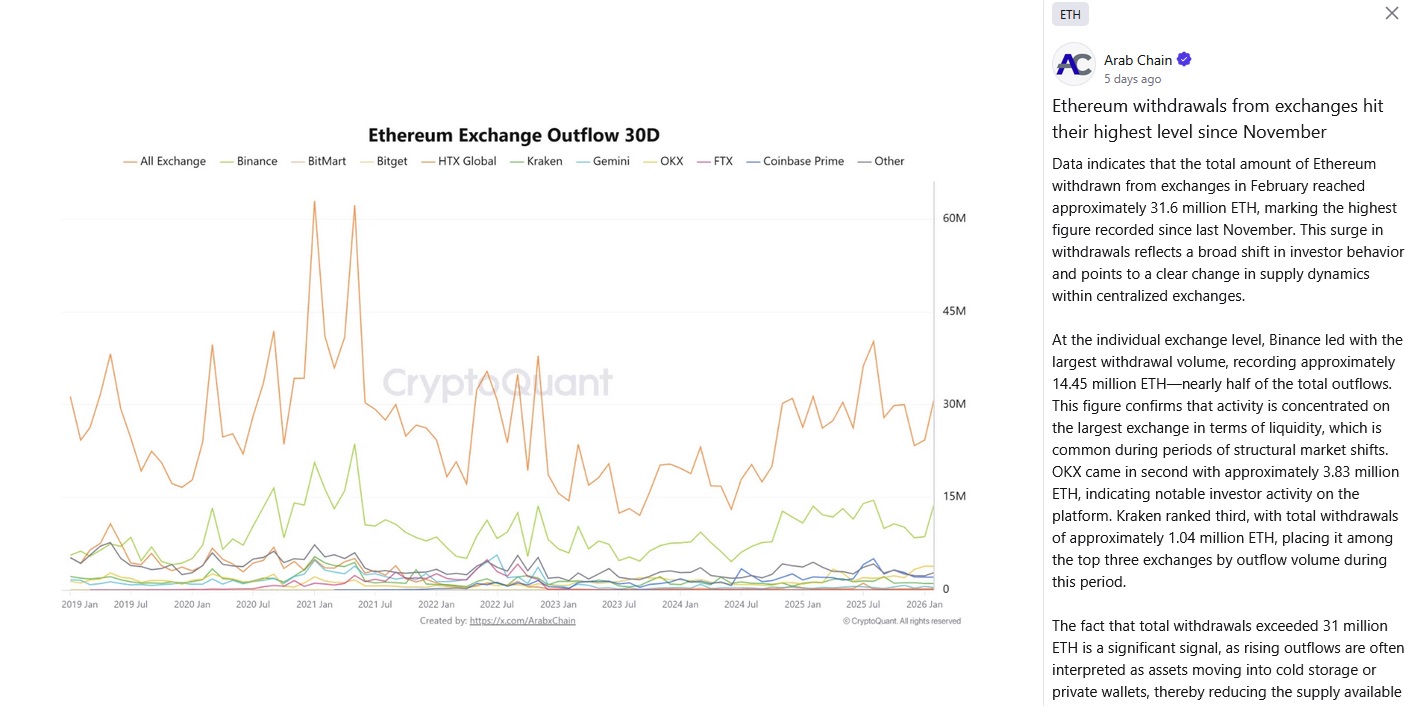
Meanwhile, the market structure surrounding Ethereum itself is changing. Data shows that the amount of Ether on centralized exchanges has fallen to multi-year lows. In February, around 31.6 million ETH were withdrawn from exchanges, with Binance alone accounting for around 14.45 million ETH. Declining exchange reserves reduce short-term market liquidity. If demand increases, this could lead to stronger price movements, especially around the psychologically important $2,000 mark.
As the Ethereum ecosystem continues evolving technically, DeFi infrastructure usage is also growing. The Aave lending protocol surpassed $1 trillion in cumulative lending volume for the first time—a milestone for decentralized financial markets. With over $27 billion in total value locked (TVL) and more than $83 million in fees over 30 days, Aave remains the dominant lending protocol. The platform is also expanding toward institutional users through specialized credit markets for tokenized assets.
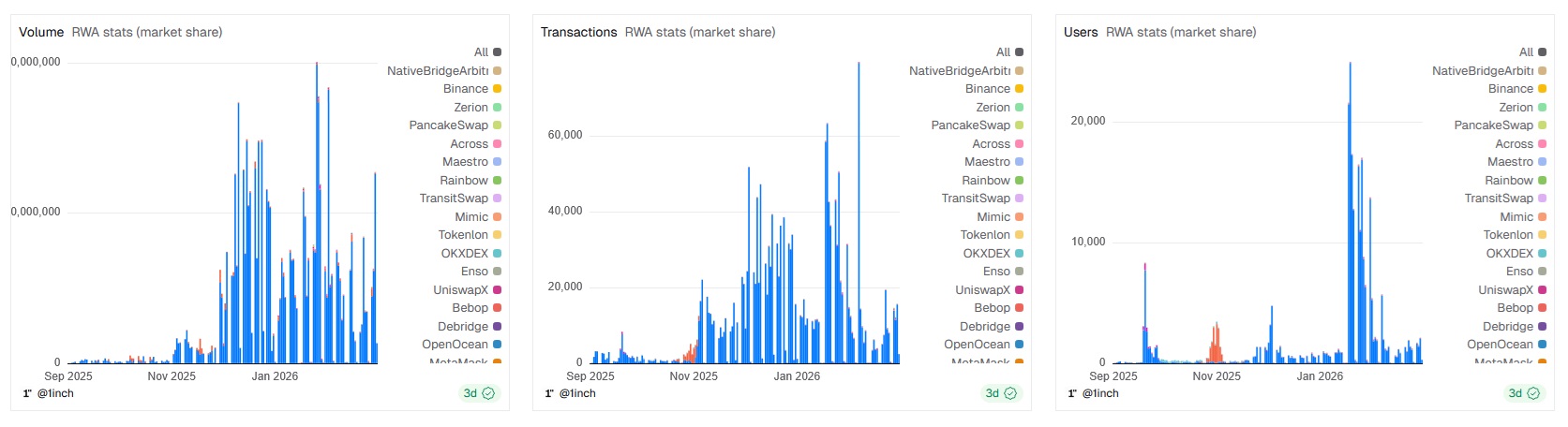
Trading volume for tokenized stocks and ETFs via the 1inch and Ondo integrations has already exceeded $2.5 billion since 2025. Meanwhile, the total value of tokenized assets on Ethereum has risen to around $15 billion. Tokenized US government bonds are particularly driving this development and are increasingly viewed as a bridge between traditional finance and DeFi infrastructure.
Together, these developments point to an ecosystem transforming on multiple levels simultaneously: faster protocol development, declining exchange liquidity, growing institutional adoption, and increasing integration of real-world assets into DeFi structures.
💡 Ethereum is evolving into an infrastructure platform for financial markets. While AI-assisted development could accelerate the technical roadmap, DeFi volumes and tokenized assets show the network's usage is undergoing structural change. The key question: can this technological acceleration keep pace with sufficient security testing?
🤯 USDC overtakes Tether
Stablecoins are increasingly becoming the central liquidity infrastructure of crypto markets. In February, monthly transfer volume reached $1.8 trillion for the first time, with USDC surprisingly overtaking long-standing market leader USDT.
According to Allium data, Circle's USDC accounted for around 70% of total stablecoin transfer volume, approximately $1.26 trillion. By comparison, Tether's USDT recorded around $514 billion in transactions during the same period. This development is particularly noteworthy because USDC, with a market cap of around $77 billion, is significantly smaller than USDT at around $184 billion. Meanwhile, USDC issuance is currently growing faster—more than 3 billion new USDC were minted in early March alone.
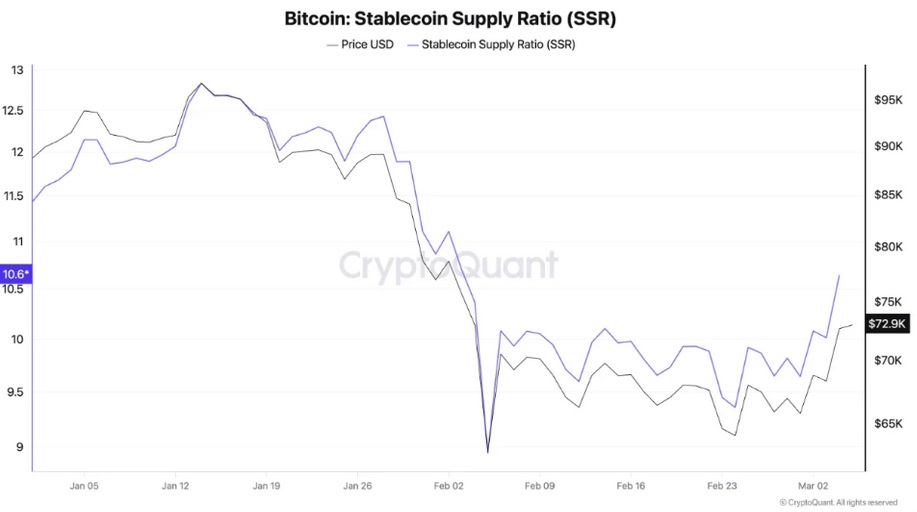
Rising stablecoin holdings on crypto exchanges are also considered an important leading indicator of potential market movements. Stablecoin liquidity held on exchanges recently rose to around $66.5 billion, while daily stablecoin transfers on exchanges at times exceeded $5 billion. Historically, such liquidity returns have often coincided with new upward phases in crypto markets, as stablecoins act as immediate purchasing power for digital assets.
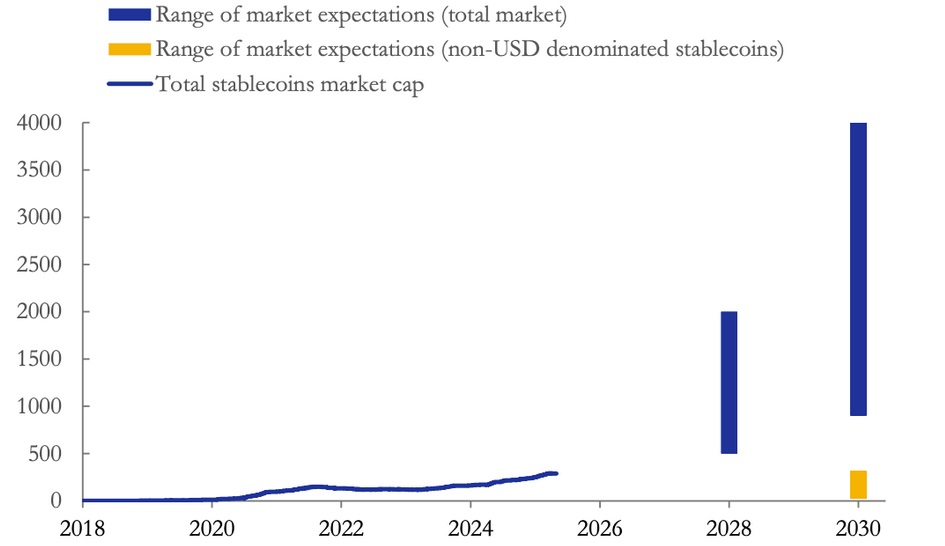
As stablecoins gain market importance, central banks are paying increasing attention to them. A European Central Bank (ECB) analysis warns that growing stablecoin adoption could displace traditional bank deposits. Since banks use deposits as a key funding source for loans, outflows into digital dollar tokens could reduce lending to businesses and households long-term, altering the impact of monetary policy measures.
This dynamic explains why European banks are now advancing their own stablecoin initiatives. The Qivalis consortium, including ING, UniCredit, and BBVA, plans to launch a euro-backed stablecoin in the second half of 2026. The goal is creating a regulated European alternative to dominant US dollar stablecoins and enabling applications like cross-border corporate payments and digital trade settlement.
💡 Stablecoins are evolving into a parallel infrastructure for global payment flows. While they fuel crypto market liquidity, central banks recognize their potential to transform traditional banking structures. Competition between privately issued dollar stablecoins and government- or bank-backed alternatives will likely become one of the key geopolitical financial battles in coming years.
 New US Cyber Strategy embraces crypto, but threatens privacy
The US government is sending mixed signals about cryptocurrencies' role in the global financial system. The Trump administration's new National Cyber Strategy marks the first time cryptocurrencies and blockchain are explicitly mentioned as technologies requiring security protection.
However, the strategy paper includes language that could enable stricter measures against infrastructure used for illegal financial flows—including mixers, privacy coins, and unregulated off-ramps.
Post-quantum cryptography also features prominently in the strategy. The government announced plans to strengthen government IT systems against potential quantum computer threats. The crypto industry has debated for months whether quantum technologies could pose long-term risks to existing blockchain signatures.
Meanwhile, the political debate over central bank digital currencies (CBDCs) is intensifying in Washington. Several US congressmen are calling for a permanent ban on digital central bank currency. In a letter to congressional leaders, they warn that CBDCs could enable comprehensive government financial surveillance and give the Federal Reserve excessive control over payment systems.
Political pressure around cryptocurrencies is also mounting in traditional banking. In debates over the US CLARITY Act, industry representatives argue that smaller banks and the crypto sector share common interests—particularly regarding new business models involving stablecoins and digital financial infrastructure. Critics warn these models could drain deposits from the traditional banking system.
A new US Treasury Department report reveals increasingly nuanced regulatory assessments. In its financial crime analysis, Treasury explicitly acknowledges for the first time that crypto mixers can serve legitimate purposes, such as protecting financial privacy in public blockchain transactions. However, the report maintains emphasis on money laundering and cybercrime risks.
In a recent victory for the crypto industry, a US federal court ruled in favor of the sector. The court dismissed a lawsuit against Binance and former CEO Changpeng Zhao alleging terrorist financing via the platform, finding insufficient connection between exchange usage and specific attacks.
💡 The US regulatory landscape for cryptocurrencies is becoming increasingly contradictory. While the government recognizes blockchain as strategically important, pressure mounts on privacy tools and decentralized infrastructure. This tension between state control and open networks will likely define the American political crypto debate for years to come.
📉 38% of altcoins at all-time lows
The altcoin market faces a deeper crisis than it did after the FTX collapse. Current data shows approximately 38% of all altcoins are trading near their all-time lows, while capital increasingly flows out of smaller tokens and into Bitcoin, stocks, and commodities.

Bitwise CIO Matt Hougan believes the classic altcoin season won't return in its previous form. Rather than broad market phases where nearly all coins rise simultaneously, he expects a much more selective cycle ahead. The winners will likely be projects that can demonstrate real-world utility, revenue potential, or concrete applications within the financial system. This suggests the market will differentiate more on fundamentals than in previous cycles, when speculative capital lifted almost all segments together.
The strain appears not only in tokens but also in publicly traded crypto vehicles. A notable example is ETHZilla, which transformed from a biotech company into an Ether treasury company in 2025. After aggressive expansion using debt capital and accumulating over 100,000 ETH at its peak, the company was forced to sell around 24,291 ETH in December 2025 to service its liabilities. Peter Thiel's Founders Fund subsequently exited completely. This case demonstrates that unlike pure Bitcoin treasuries, Ether-based treasury models carry additional risks including staking, DeFi exposure, smart contract vulnerabilities, and greater operational complexity.
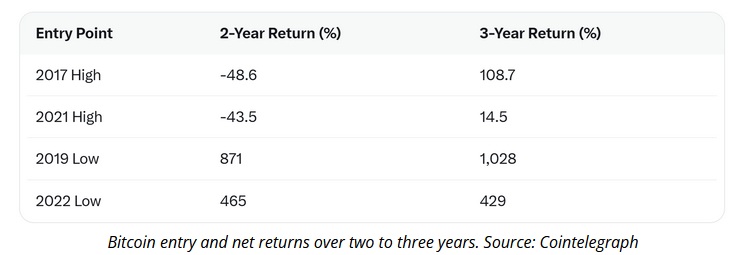
Meanwhile, market interest increasingly centers on Bitcoin itself. New data confirms that investment horizon remains critical. Investors who held Bitcoin for at least three years historically reduced their probability of loss dramatically. Even purchases made near previous peaks often became profitable with longer holding periods.
Additionally, analyses suggest that dollar-cost averaging (DCA) (making regular purchases regardless of price) remains the most stable long-term strategy. Historical simulations demonstrate that consistent purchases over several years can deliver robust results even with volatile entry points.
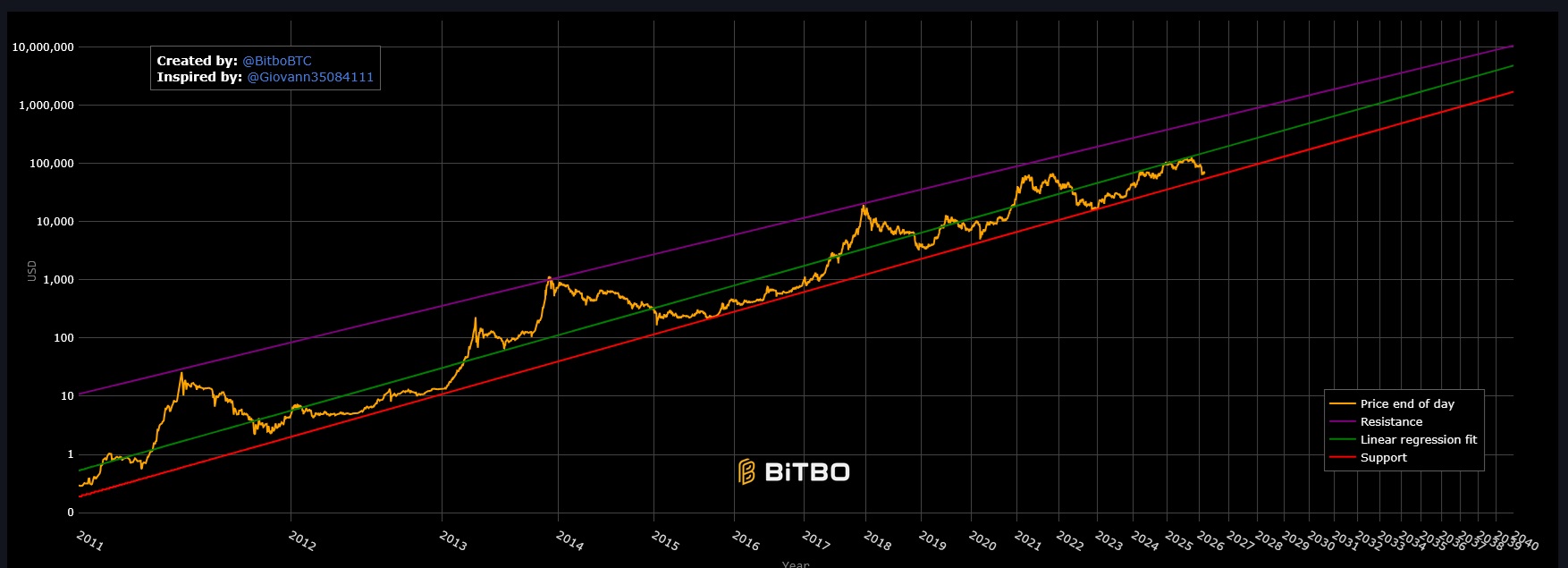
Together, this creates a significantly transformed market landscape. While altcoins suffer from limited liquidity, oversupply, and lack of institutional support, capital shifts toward Bitcoin and select infrastructure plays. The market is becoming more selective, slower-moving, and less driven by broad speculative waves.
💡 The data signals structural change. The market is abandoning the notion that every Bitcoin rally automatically triggers a broad altcoin phase. Instead, only projects with genuine use cases or solid capital bases are gaining relevance. For investors, this means less rotation euphoria, more careful selection, and an even stronger focus on timing, liquidity, and balance sheet quality.