How to use WalletConnect
Learn how to use WalletConnect to connect your mobile wallet to DeFi platforms and web dApps, and make transactions on them.
 5 minutes|Yann Gerardi|Published 2020-09-29|
What is WalletConnect?
WalletConnect is a convenient open source tool that enables any mobile crypto wallet to easily establish a secure connection with web-based decentralized applications (dApps), and interact with them from a smartphone.
How does WalletConnect work?
WalletConnect works by creating a secure, encrypted connection between your mobile wallet and a web-based application without ever exposing your private keys.
Here is what happens behind the scenes when you connect your wallet to a DeFi app via WalletConnect:
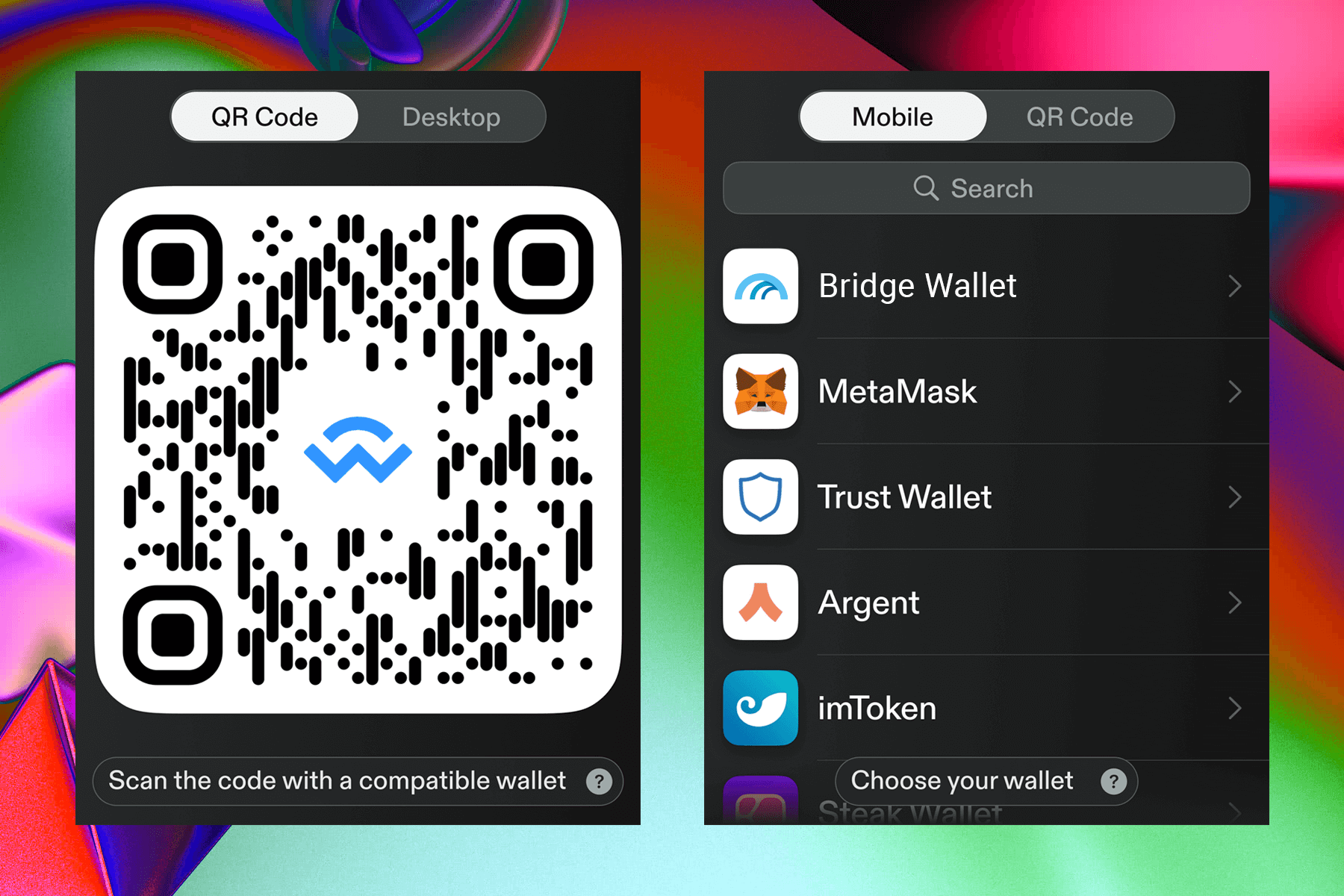
- The dApp generates a unique QR code or a deep link on mobile that contains a one-time connection request.
- Your wallet scans the QR code and establishes an encrypted peer-to-peer session with the dApp via the WalletConnect server.
- The server acts as a bridge, it passes messages between your wallet and the dApp but it never has access to your private keys or your funds.
- Every transaction must be manually approved in your wallet. The dApp can request a transaction, but nothing happens until you press the "approve" button.
Your private keys never leave your device. WalletConnect only allows dApps to send you requests, you always remain in full control of what you sign and what you approve. That's why it is very important to always double check and verify what you are approving.
How to use WalletConnect?
The tutorial below shows you how to use WalletConnect from our mobile app Bridge Wallet, but the process is the same for any other mobile wallet that supports WalletConnect.
1: Open a DeFi application on your web browser
Open your web browser and navigate to the website of the DeFi application that you want to use, for example a decentralized exchange, a lending protocol, or a bridge service.
Make sure you are on the official URL of the application. Do not click unverified links from emails, social media or search ads. Always type or bookmark the official address to avoid phishing.
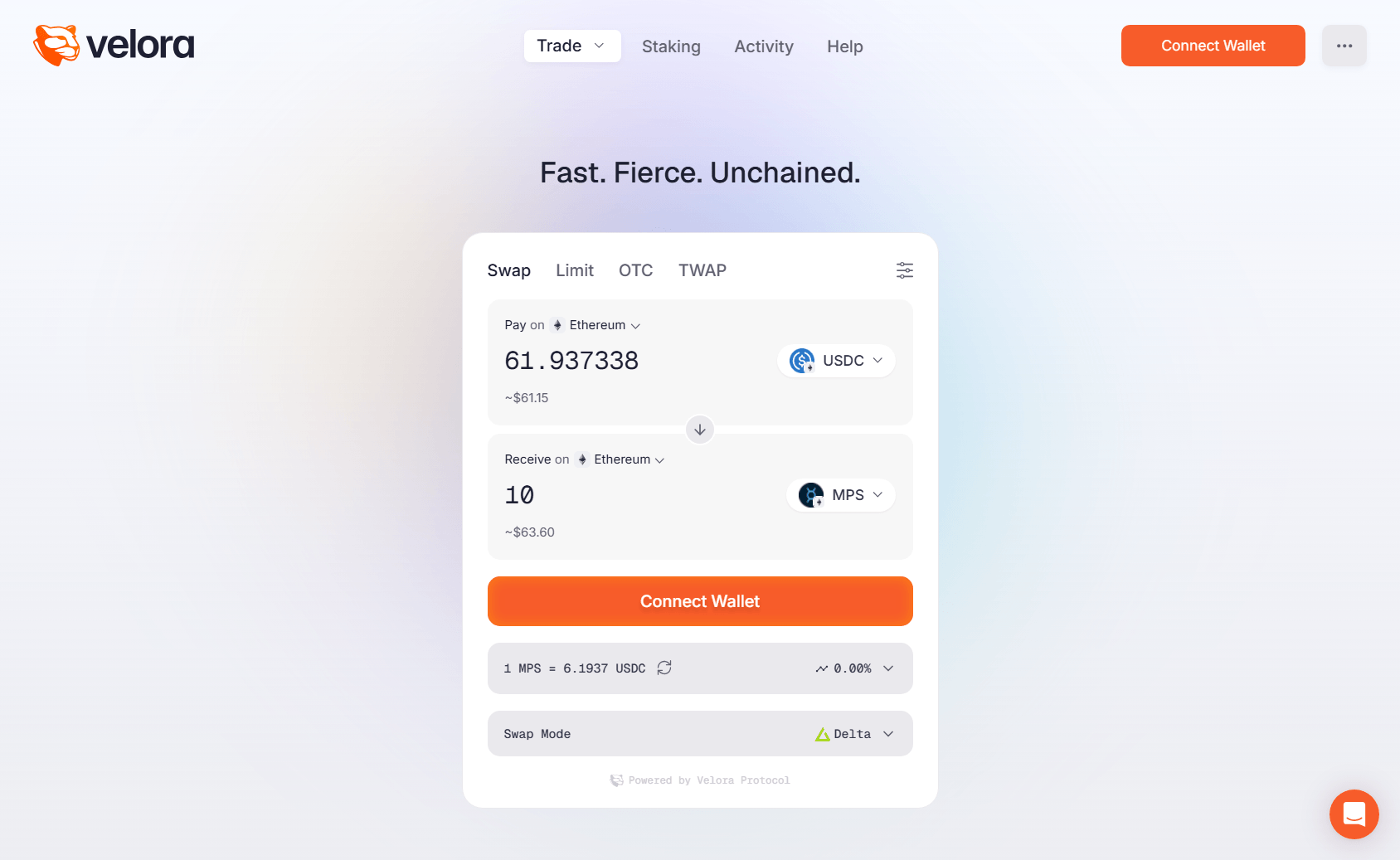
For this example, we go to app.velora.xyz but the process is the same for any other DeFi app.
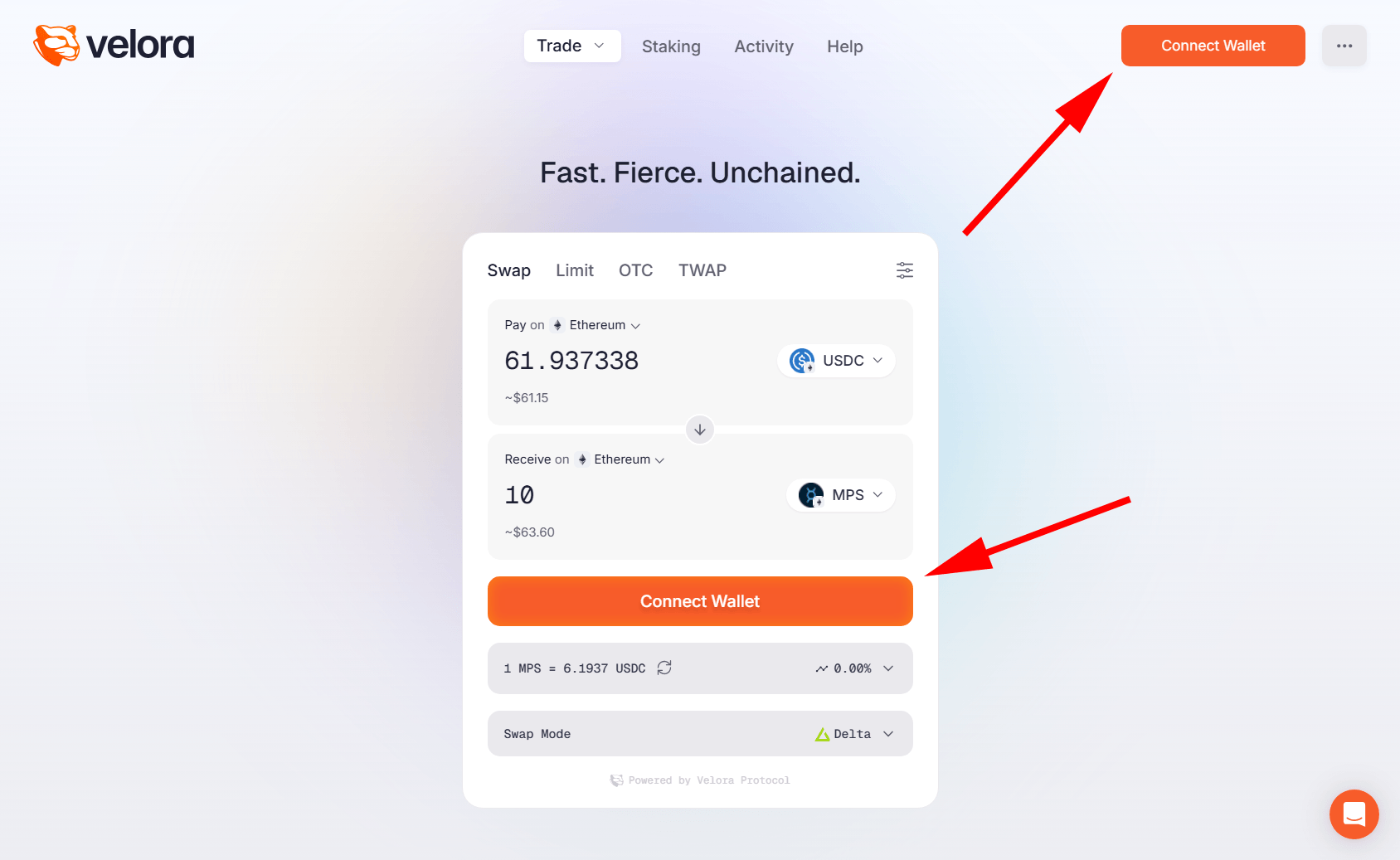
2: Click "Connect Wallet" on the dApp
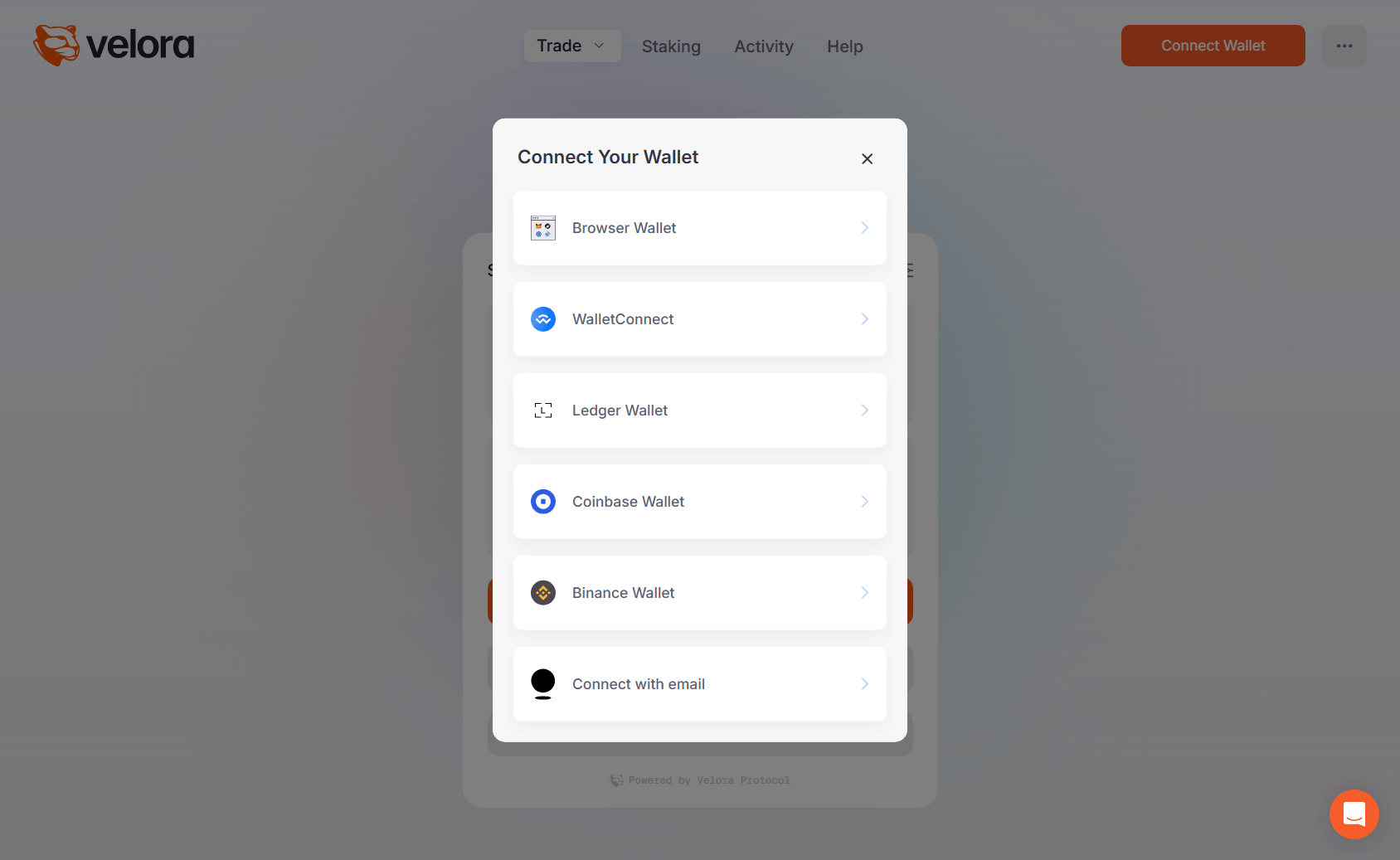
Find and click the "Connect Wallet" or "Connect" button on the DeFi application. This is usually located in the top right corner of the interface. A wallet selection modal will appear listing available connection methods.
3: Select WalletConnect from the connection options
In the wallet selection modal, choose WalletConnect. Do not select a browser extension option (such as MetaMask extension) if you want to connect your mobile wallet, select WalletConnect specifically. A QR code will appear on your screen.
4: Choose the WalletConnect option
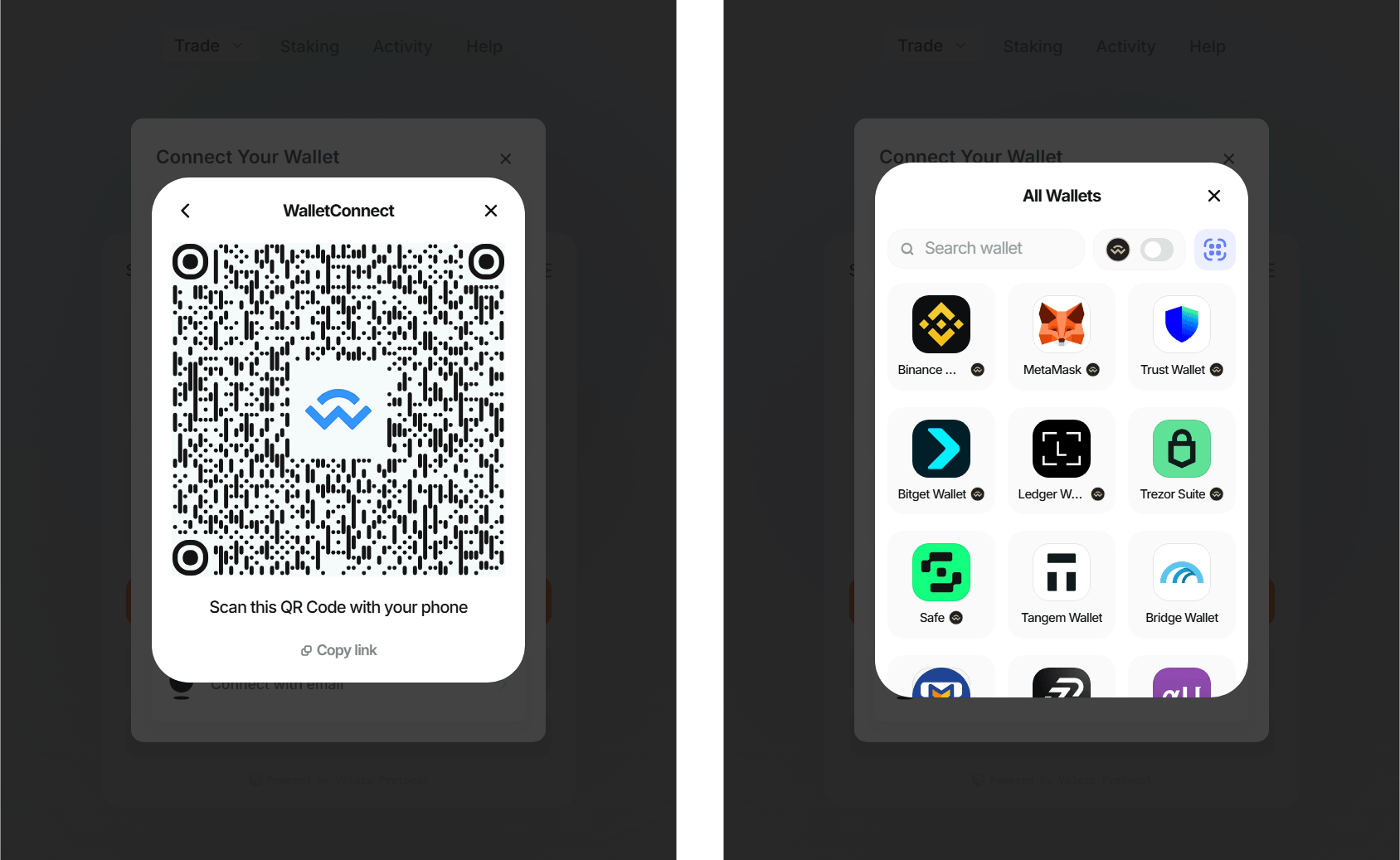
If you opened the web dApp from a desktop browser, WalletConnect will show you a QR code to scan. If you opened it from a mobile browser, it will show you a list of compatible wallets: find yours and click on it.
5: Open WalletConnect in your mobile wallet
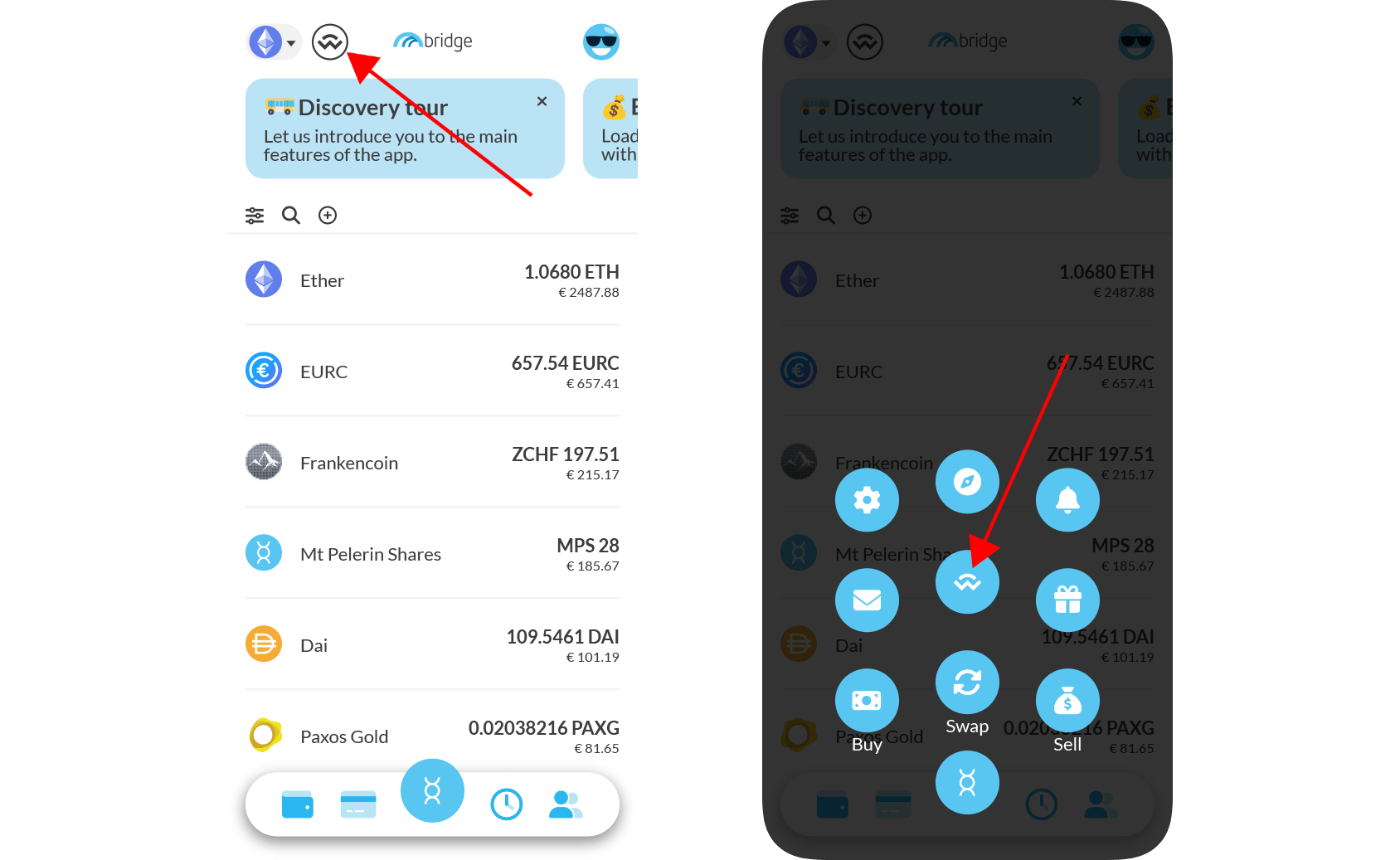
If you chose the QR code option, open your mobile wallet app and locate the WalletConnect or QR code scanner feature, and scan the QR code. In Bridge Wallet, this is accessible via the WalletConnect icon on the main screen or inside the magic menu. The exact location varies by wallet app.
6: Review and approve the connection request
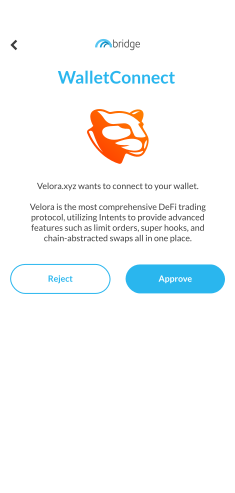
Your wallet will display a connection request showing the name and URL of the dApp requesting access, and a short description of the app. Verify that the dApp name and URL exactly match the site you opened in step 1, this is your last line of defense against phishing. If everything matches, tap "Approve". Connecting your wallet does not give the dApp permission to move your funds, it only shares your public wallet address.
7: You're now connected
After approving in your wallet, return to the web browser. The dApp should now show your wallet address in the top right corner, confirming the connection is live. You can now interact with the dApp for swapping, lending, staking or any other available action. Each transaction you will initiate on the dApp will require a separate approval in your mobile wallet, so keep it open on the WalletConnect screen.
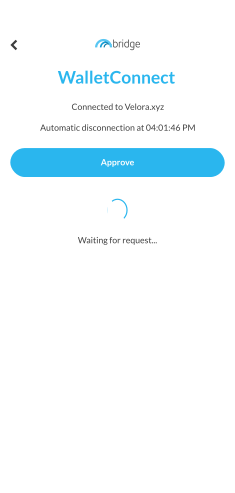
8: Disconnect when finished
When you have finished using the dApp, disconnect your wallet rather than simply closing the browser tab for better security. On the WalletConnect screen of your mobile app, click the "Disconnect" button. You can also do that in the dApp: click your wallet address or the connected wallet icon and select "Disconnect".
FAQ
WalletConnect is used to connect a mobile crypto wallet to web-based decentralized applications (dApps) without needing a browser extension. It is most commonly used to access decentralized exchanges (DEXs), lending protocols, NFT marketplaces, and other DeFi platforms directly from your mobile wallet. WalletConnect works across a wide range of blockchain networks, including Ethereum, Polygon, BNB Chain, Arbitrum, and many others, making it one of the most widely used connection standards in the Web3 ecosystem.
WalletConnect works with Ethereum and its entire ecosystem of EVM chains, layer-2 networks and sidechains. It also supports Bitcoin, Solana, SUI, Stacks, TON, Tron, ADI Chain and Canton.
More than 70,000 apps support WalletConnect, so it's not possible to list them all. You can safely assume that all DeFi apps support WalletConnect.
Yes, WalletConnect is safe to use. It creates an encrypted, peer-to-peer connection between your wallet and the dApp. Your private keys never leave your device at any point during the process. The WalletConnect server only passes encrypted messages between the two parties and has no access to your funds. Every transaction must be manually reviewed and approved inside your wallet before anything is executed on the blockchain.
That being said, WalletConnect itself is only as safe as the dApp you connect to. If you connect to a phishing website and approve a malicious request, you will lose funds. To avoid that, always verify that the URL of the platform you are connecting to is the official one before approving any transaction, and disconnect your wallet from dApps you no longer use.
A good practice is to also review all your past approvals from time to time and remove all that are not useful anymore. You can do that on revoke.cash or directly on blockchain explorers like etherscan.io.
The process depends on whether you are on desktop or mobile:
On desktop: Open the dApp in your browser and click the "Connect wallet" button. Select WalletConnect from the list of options. A QR code will appear. Open your mobile wallet, navigate to the WalletConnect or QR scanner section, and scan the code. The connection is established instantly.
On mobile: Open the dApp in your mobile browser and tap "Connect wallet", then select WalletConnect. Instead of a QR code, you will see a list of compatible wallets or a deep link that opens your wallet app directly. Confirm the connection inside your wallet.
In both cases, your wallet will ask you to approve the connection before any dApp can send you transaction requests.
You must stay on your mobile wallet's WalletConnect screen while using the web app you are connected to. If you leave that screen, you will be disconnected.
This can happen for multiple reasons. To solve it, try the following things:
- Make sure to have installed the latest version available for your mobile crypto wallet.
- Disconnect your wallet, force refresh the web page (ctrl-F5 / ⌘-shift-R) and try connecting again. You may have to do that a few times until it works.
- Check if you have any ad blockers or similar browser plugins enabled which might interfere, and try disabling them.
- Try opening the web app in private/incognito navigation mode.
- Try opening the web app on a different browser.
- If you're on your mobile browser, try using the web app from a desktop browser.
If you get a "wrong chain" or an "unsupported chain" error message when scanning a WalletConnect QR code, it means that the dApp wants you to scan the code from a specific network. Check which one it is and switch to the correct network in your mobile app before trying again. If it doesn't say, switch to Ethereum mainnet and try again.
If your WalletConnect screen in your mobile wallet shows "Waiting for request" or similar, it simply means that your wallet is properly connected to the web app and that it is waiting for you to take an action there.
You can disconnect a WalletConnect session from either side: your wallet or the dApp.
From your wallet: Open your wallet app and navigate to the WalletConnect or connected apps section. You will see a list of all active sessions. Tap the session you want to end and select "Disconnect".
From the dApp: Most dApps display a connected wallet indicator in the top right corner of the interface. Click on it and select "Disconnect" or "Logout".
It is good security practice to disconnect from dApps you no longer use. Active WalletConnect sessions can still send you transaction requests until they are explicitly closed. Disconnecting ensures no further requests can be made without your action.
No, WalletConnect is designed to work with a mobile wallet app installed on your smartphone. When you connect via WalletConnect on desktop, the QR code must be scanned by a compatible wallet app on your phone. Without a mobile wallet, the connection cannot be completed.
If you prefer to connect directly from your desktop browser without using your phone, a browser extension wallet such as MetaMask or Rabby Wallet is a more practical option for that use case.
That being said, if you are using a dApp on your mobile browser, WalletConnect can open your mobile wallet app directly via a deep link. No QR code scanning required in that case.
WalletConnect sessions have a built-in auto expiry time. Sessions typically last up to 7 days by default, though individual wallets like Bridge Wallet can set shorter durations. Most wallets will show you the duration of a connection. Once the session expires, the connection between your wallet and the dApp is automatically closed and you will need to reconnect.
A session can also expire or disconnect earlier if:
- Your phone's internet connection was interrupted
- The dApp was updated or redeployed
- Your wallet app was force-closed or the session was cleared from memory
To reconnect, simply go back to the dApp and repeat the connection process: click "Connect wallet", select WalletConnect, and scan the QR code or approve the deep link in your wallet.