How to bridge cryptocurrencies
This tutorial explains how crypto bridges work, what makes some of them risky, and shows you step by step how to move your cryptocurrencies across chains from a wallet you control.
 15 minutes|Yann Gerardi|Published 2024-06-21|
A crypto bridge moves value from one blockchain to another. Nothing physically crosses over: the bridge takes your crypto on the origin chain and makes the equivalent value appear on the destination chain, minus a service fee. How it does that determines how much risk you take. Mt Pelerin, a Swiss regulated financial intermediary, bridges crypto across 16 blockchains straight between self-custodial wallets, without minting any wrapped token of its own and with no exchange fee on the first CHF 500 you bridge each year.
What a crypto bridge actually does
Understanding what happens under the hood is worth five minutes of your time, because the differences between bridges are exactly where the risk sits.
1. Why bridges exist
Blockchains are independent systems. An Ethereum node has no idea what happens on Bitcoin, and a Bitcoin node has no idea what happens on Polygon. There is no protocol that lets one chain read the state of another, and no way to make a coin leave its own ledger.
That would not matter if everything lived in one place, but it doesn't. Fees are cheap on layer 2 networks and more expensive on Ethereum. A lending market you want to use may only exist on one chain. A stablecoin you hold on Polygon is worthless to a service that only accepts it on Base. So people constantly need the same crypto to be available somewhere else, and a bridge is the service that arranges it.
2. The three kinds of bridge
Since a coin cannot leave its chain, every bridge is a trick of accounting. There are three families, and they differ in who you have to trust:
- Lock-and-mint bridges: Your crypto is locked in a smart contract on the origin chain, and the bridge mints a matching wrapped token on the destination chain. What you receive is an IOU issued by the bridge. It is only worth something as long as the locked collateral is still there and the bridge is still able to redeem it.
- Liquidity bridges: The bridge keeps pools of the same asset on both chains. You add to the pool on one side, the bridge pays you out of the pool on the other side. You receive a real asset rather than a wrapper, but the payout depends on the pool being deep enough, so large transfers can move the price against you.
- Custodial bridges: An exchange or a broker receives your crypto on one chain and sends you crypto on another. The mechanics are simple and there is no smart contract to exploit, but on most platforms you have to deposit funds first and trust the company to let you withdraw them.
3. Why bridges get hacked
Bridges have been among the most attacked pieces of infrastructure in crypto. Ronin, Wormhole and Nomad were each drained for tens or hundreds of millions of dollars in 2022, and they were not obscure projects.
The reason is structural. A lock-and-mint bridge has to hold, in one contract, the collateral backing every wrapped token it has ever issued. That contract becomes a single honeypot whose value grows with adoption, and it only has to be broken once. When it is, the wrapped tokens on the other chain lose their backing and everyone holding them is left with a claim on nothing.
The practical lessons are simple: don't sit on bridge-issued wrapped tokens longer than you need to, don't bridge more than you actually intend to use, and prefer a service that hands you an asset which keeps its value whatever happens to the bridge afterwards.
4. How our bridge works
Our bridge belongs to the third family, with one important difference: nothing is ever deposited with us.
You send your crypto on the origin chain directly from your own wallet, and we send you funds on the destination chain from our own liquidity, directly to your own address. There is no account to fund, no balance to withdraw, and no bridge contract sitting on a pool of user collateral. We never mint a wrapper of our own either, so what lands in your wallet is an asset that exists independently of us: native ETH, native USDC, WBTC issued by its own issuer, and so on.
Because we quote from our own liquidity rather than from a pool you are trading against, there is no spread, no slippage and no price impact, whatever the size of your transfer. And because you keep your crypto in your own wallet until the moment you send it, the window during which anything is out of your control is the few minutes it takes us to deliver.
What you need before you bridge
Three things, and one of them is the one people forget:
- Crypto in a self-custodial wallet on the origin chain. A wallet whose address and private key or secret phrase you control, such as our own app Bridge Wallet, MetaMask, Rabby, Ledger or Trezor. If your crypto currently sits on a custodial platform, you will first need to withdraw it, and those platforms usually charge for that.
- An address that is valid on the destination chain. It can be the same wallet or a completely different one, as long as it belongs to you. Two checks are worth making before you confirm: that the address really exists on the destination chain, and that the wallet holding it can display the asset you are about to receive. Bridging to an address you cannot access means funds you cannot spend, and no bridge can undo that.
- Enough native crypto on the origin chain to pay the network cost. You send the transfer yourself, so you pay the blockchain fee for it: ETH on Ethereum and Arbitrum, BNB on BNB Chain, POL on Polygon, and so on. This is the one people forget, and it is why a transaction sometimes refuses to start. On the receiving side there is nothing to pay, because we deliver the funds to you, so you don't need to already hold the native crypto of the destination chain. See our support page for more about network costs.
What it costs and how long it takes
The table below summarizes what you pay to bridge crypto with Mt Pelerin and how long a transfer takes to be delivered:
| Bridging crypto | |
|---|---|
| Bridge fee | Fully free on the first CHF 500 bridged per year, then 0.3%. USDC to USDC bridges are free (USDC.e excluded). No spread. MPS token holders get more free volume and lower fees. |
| Delivery fee | Free on every blockchain we support, except tokens delivered on Ethereum, which cost USD 1. |
| Network cost | At your expense on the transfer you send us, charged by the origin blockchain in its native cryptocurrency. Nothing to pay on the destination chain. |
| ID verification | Not required up to CHF 999 per 30 days |
| Min. per transaction | CHF 1, or equivalent |
| Max. per transaction | No fixed maximum, only the liquidity available at that moment (contact us for more) |
| Blockchains | 16 supported chains, in any direction |
| Wrapped tokens | None issued by us. You receive the asset you selected on the destination chain |
| Slippage and price impact | None, whatever the size of your transfer |
| Delivery speed | Anywhere between minutes and hours, depending on network and liquidity conditions |
The full fee schedule, including the volume tiers and the MPS token benefit, is on our pricing page.
Supported chains and popular routes
You can move cryptocurrencies between the following networks, in any direction, using any of your self-custodial wallets:
- Arbitrum
- Avalanche
- Base
- Bitcoin
- BNB Chain
- Celo
- Ethereum
- Gnosis Chain
- Lightning
- Optimism
- Polygon
- Rootstock
- Sonic
- Tempo
- Tezos
- zkSync Era
Any asset we support on two of these chains can be bridged between them. The four most common cases have their own page, with the full list of routes available for each:
- Bridge BTC, to and from Lightning, WBTC on Ethereum, Arbitrum, Gnosis Chain, Optimism and Polygon, cbBTC on Ethereum and Base, BTC.b on Avalanche, BTCB on BNB Chain, RBTC on Rootstock and tzBTC on Tezos.
- Bridge ETH, between Ethereum and its layer 2 networks.
- Bridge USDC, no fees.
- Bridge USDT, across the chains where it is available.
The full inventory of assets per chain is on our supported blockchains and currencies page.
Below is how it works in practice with our service, first via our web app and then in our mobile app.
💻 How to bridge crypto with our web app
You can bridge cryptocurrencies from any of your existing wallets, as long as the wallet is self-custodial (meaning that you control the wallet address and its private key / secret phrase).
This step-by-step tutorial below shows you how it works:
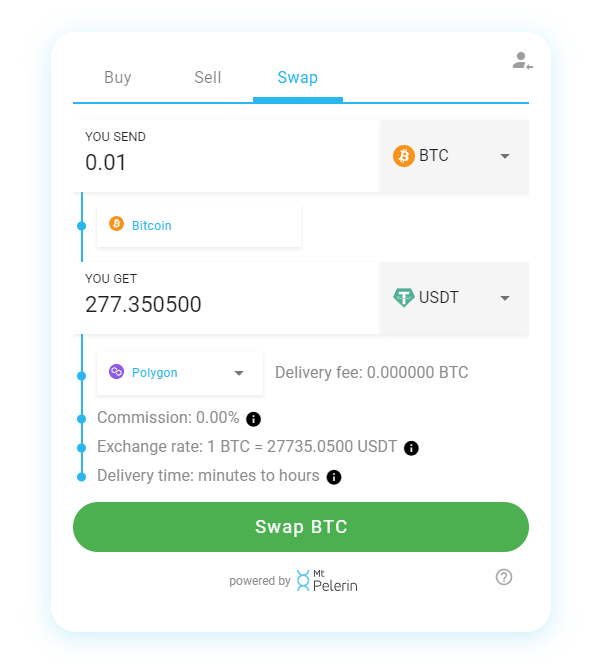
1. Go to our bridge interface
You can access it on our website here or through any other partner website. It looks like this:
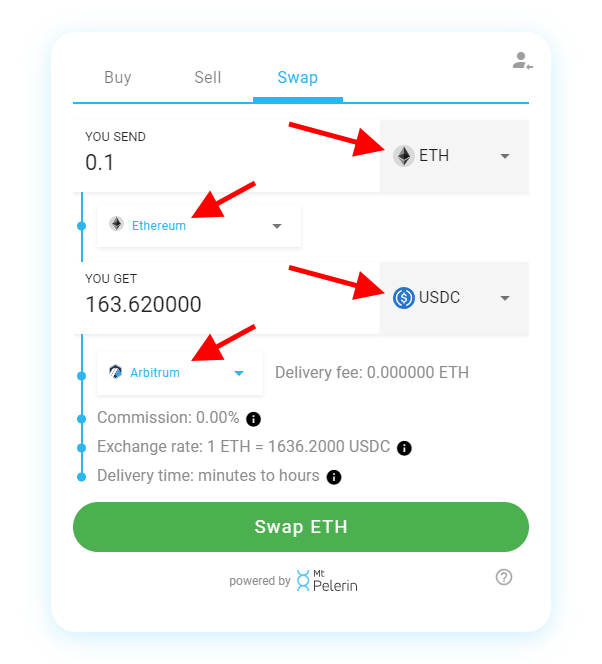
2. Choose your route
Choose the following things:
- The crypto you'd like to send
- The origin chain you want to send it from
- The crypto you'd like to receive
- The destination chain you'd like to receive it on
To bridge an asset without changing it, pick the same cryptocurrency on both sides and only change the chain. Then, click the green "Swap" button to continue:
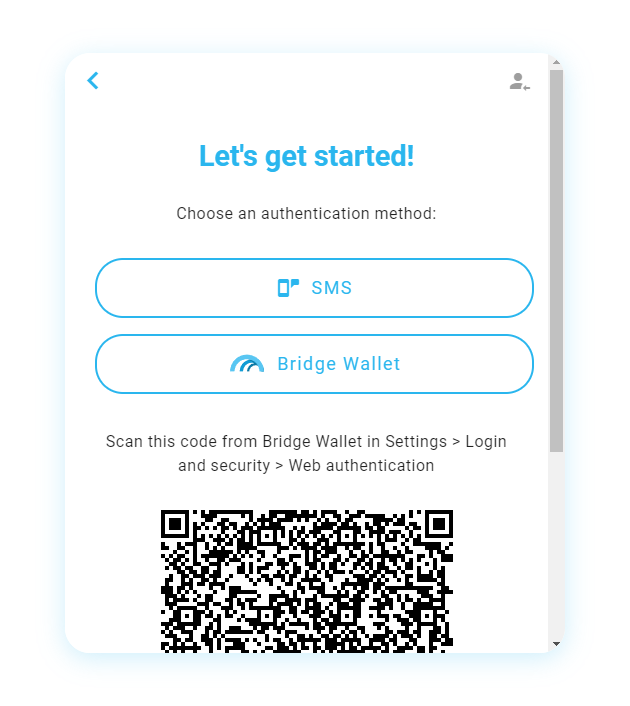
3. Register or login
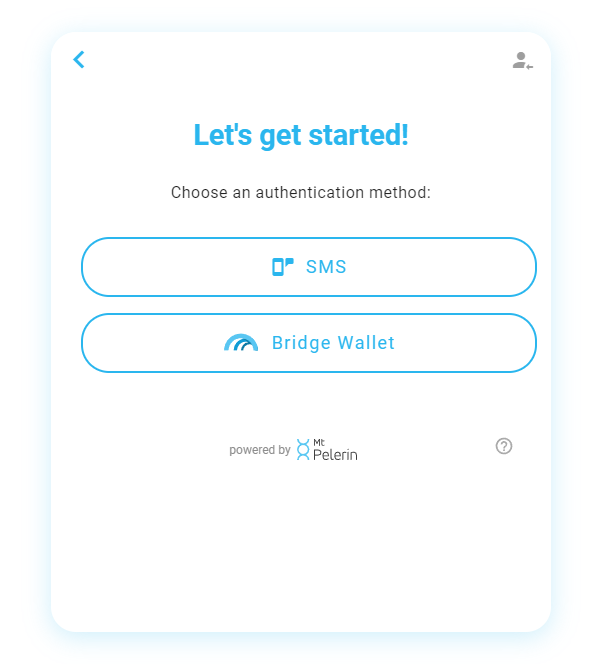
All you need to register is an email address and one of these authentication methods:
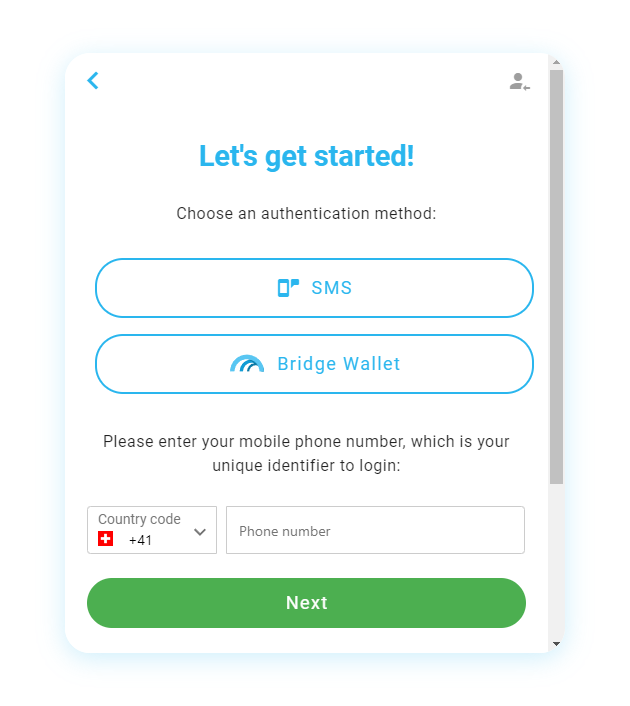
- SMS: you will need to provide a phone number and confirm it with an SMS code.
- Wallet signature: Download Bridge Wallet, create or restore a wallet, then go in the user profile menu on the top right of the app's main screen, and choose the signature option. You can then use the "Login with Bridge Wallet" option here.
If you already have a profile with us, login with one of the methods available to continue. For this example, we choose the SMS option:
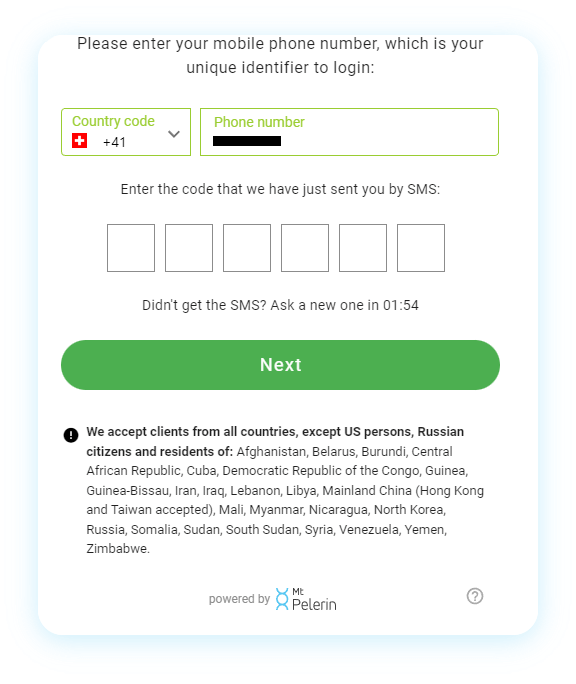
4. SMS code confirmation
Enter the code that you have received by SMS. If you haven't received any, you can ask for a new one after the timer cooldown:
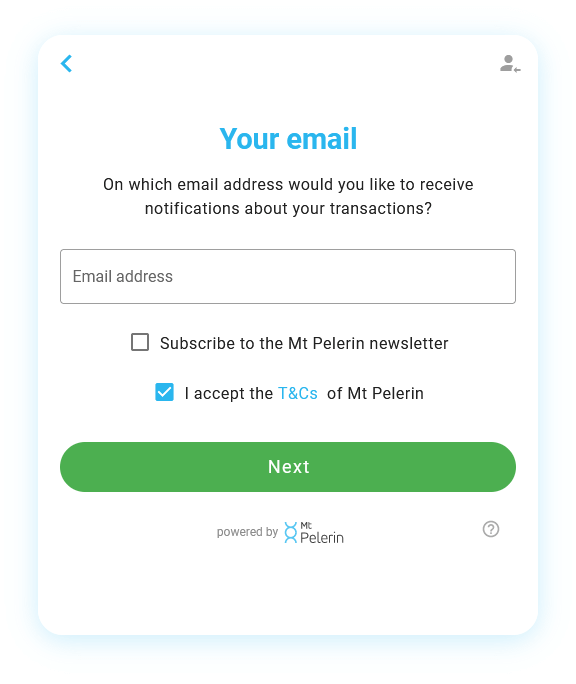
5. Email
Enter an email address, where you will receive notification emails about your transactions:
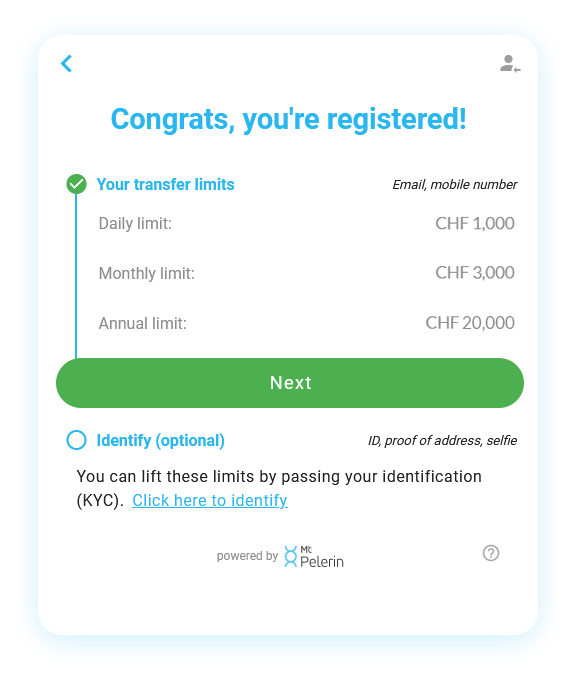
6. Registered
You will see here your profile status and your volume limits. Click "Next" to continue:
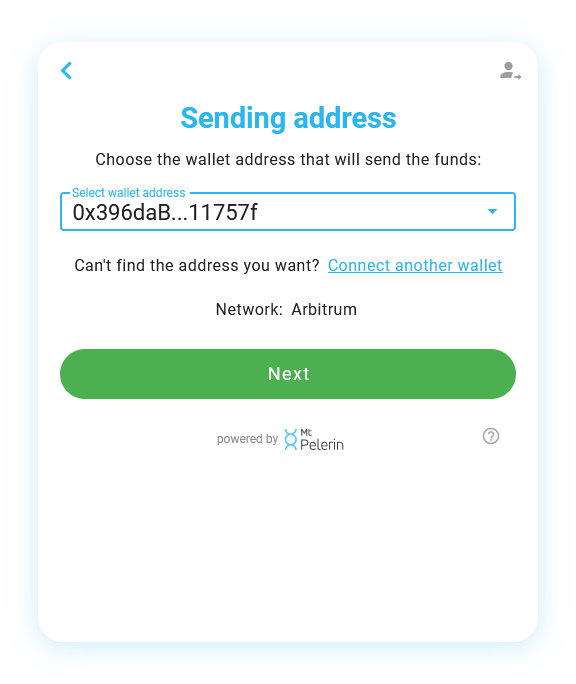
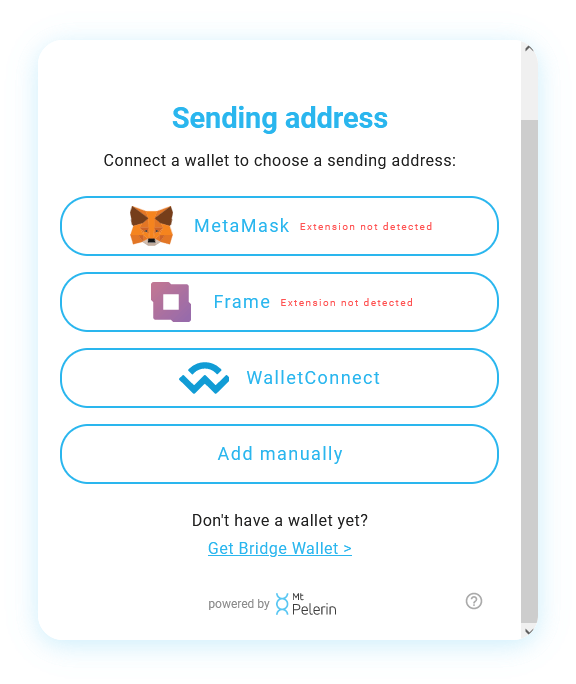
7. Sending address
Choose one of the available options to connect a wallet and choose the address that will send the crypto on the origin chain.
If you already have a profile with us, you will be able to choose one of the wallet addresses that are linked to your profile, or add a new one. See here for a detailed tutorial.
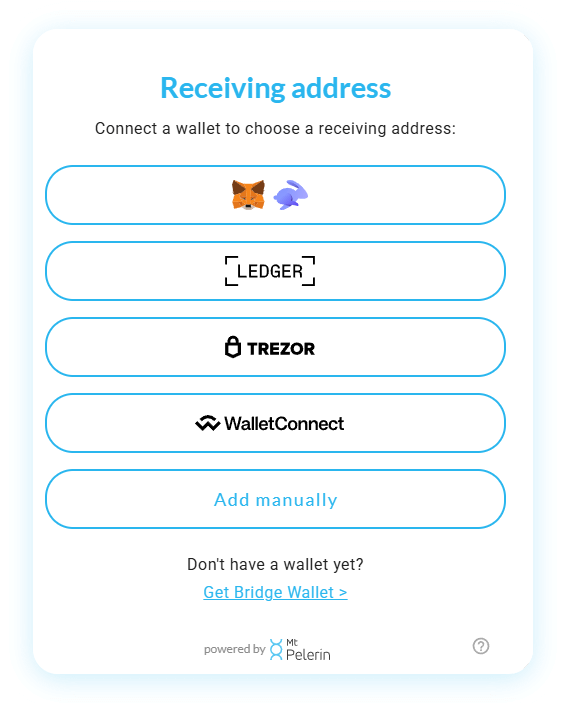
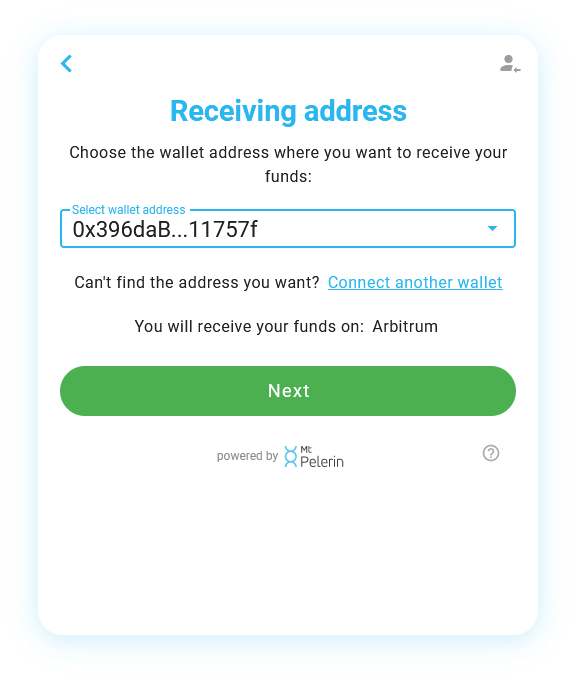
8. Receiving address
Choose one of the available options to connect a wallet and choose the address on which you will receive your crypto on the destination chain. It can be the sending address or a completely different one, as long as it belongs to you.
If you already have a profile with us, you will be able to choose one of the wallet addresses that are linked to your profile, or add a new one.
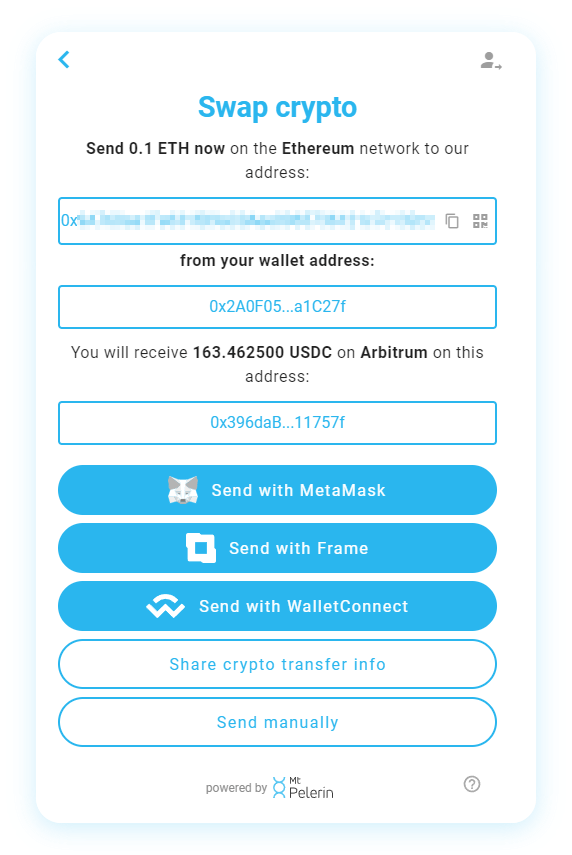
9. Crypto transfer
Send your crypto to our wallet address, using one of the methods available here. Two things must match your order:
⚠️ You must send the crypto on the origin blockchain that you have selected at step 2.
⚠️ You must send the crypto from the wallet address that you have selected at step 7.
Once we have received your crypto, you will receive a notification email to confirm it (please note that it can take several hours to be sent). After that, we deliver your funds on the destination chain. You will receive a second notification email with the detail of your transaction as soon as they have arrived on your receiving address.
📱 How to bridge crypto with our mobile app
If you don't have a crypto wallet yet, downloading our mobile app is the easiest way to get started. It is self-custodial, it supports every chain we bridge between, and it lets you switch chains without leaving the app. This step-by-step tutorial below shows you how it works:
1. Download Bridge Wallet
Bridge Wallet is the free mobile app that we've made to easily invest in crypto assets and manage them from your phone. To download it, click the button below:
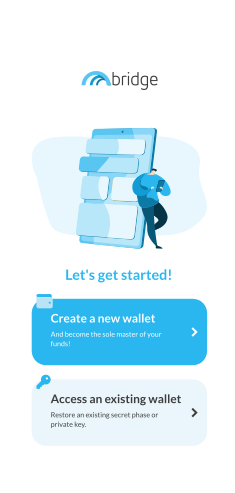
2. Create a new wallet
Create a new wallet, or restore an existing one if you prefer to. If you need help on the creation of a wallet, we have made a step-by-step guide here.
3. Register or identify
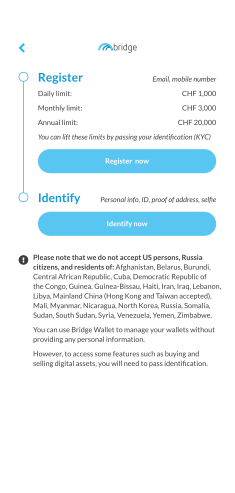
Go in the user profile menu on the top right of the app's main screen, choose an authentication mode then provide an email address on which you will receive notifications about your transactions.
Registering allows to bridge crypto up to CHF 999 per rolling period of 30 days (or equivalent in other currencies).
To bridge crypto above this limit, you will need to identify. For more info, please see our support page.
4. Select the origin chain
Use the network icon on the upper left of the screen to switch to the chain your crypto is on. The assets available on that chain are then displayed in the app.
You can see the full list of chains and assets on this page.
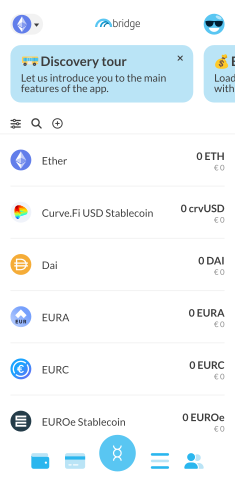
5. Choose the crypto to bridge
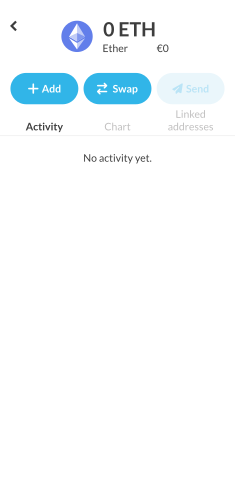
Select the cryptocurrency you want to move to another chain. If you don't hold it in the app yet, click on the "Add" button.
6. Transfer crypto to your address
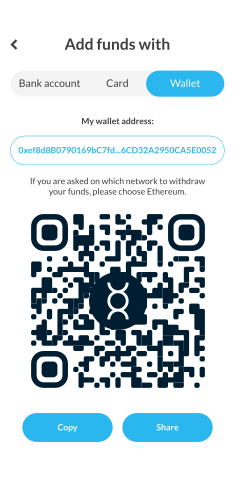
Select the "Wallet" tab, then transfer crypto to the address displayed here. Since the app is self-custodial, please note that you will need to cover the network costs of the origin chain to bridge your cryptocurrency. More information about them on our support page.
7. Start the bridge
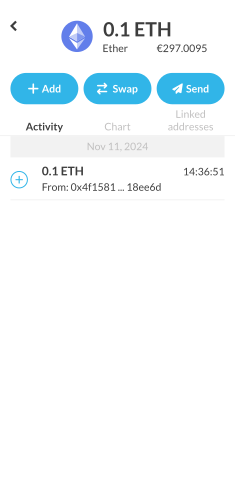
Once your crypto has been transferred to your address, go back to the crypto's screen and click on the "Swap" button.
8. Choose your destination chain
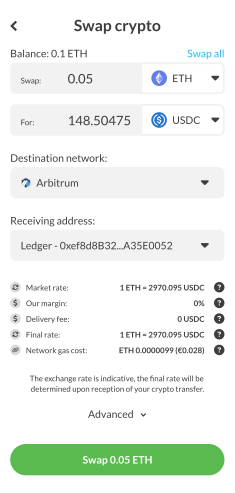
Choose the amount you want to move, then the destination blockchain. To bridge without changing the asset, select the same cryptocurrency on the destination side.
Different chains hold different assets, so change chains to see what is available where.
9. Confirm
Once you click the "Swap" button, your cryptocurrency will be withdrawn from your wallet on the origin chain. We will deliver the funds on the destination chain as soon as we receive it. You will receive a confirmation email with the detail of your transaction as soon as it is completed. See the table above for the time a bridge usually takes to be delivered.
🙋♂️ FAQ
What is a crypto bridge?
A crypto bridge is a service that moves value from one blockchain to another. Blockchains cannot talk to each other natively, so a bridge takes your crypto on the origin chain and makes the equivalent value appear on the destination chain, minus a fee.
How does a crypto bridge work?
Nothing physically crosses between two blockchains. Most bridges lock or burn your crypto on the origin chain and mint or release a matching amount on the destination chain. Mt Pelerin works differently: you send your crypto to our address on the origin chain and we send you funds from our own liquidity on the destination chain, so no wrapped token is created.
Do I get wrapped tokens when I bridge with Mt Pelerin?
Only if you specifically ask for one. We deliver the asset you selected on the destination chain, which can be a native asset or a wrapped one such as WBTC. Our bridge does not mint its own wrapper, so you are never left holding a token that depends on us staying in business.
Which blockchains can I bridge between?
We support 16 blockchains: Arbitrum, Avalanche, Base, Bitcoin, BNB Chain, Celo, Ethereum, Gnosis Chain, Lightning, Optimism, Polygon, Rootstock, Sonic, Tempo, Tezos and zkSync Era. Any asset available on two of these chains can be bridged between them, in any direction. See our supported blockchains and currencies page for the full inventory.
What does it cost to bridge crypto?
The first CHF 500 you bridge each year is free of exchange fee, and above that the commission is 0.3% of the transaction amount. Bridging USDC to USDC is free (USDC.e excluded), and MPS token holders get more free volume and lower fees. Delivery is free on every blockchain we support, except tokens delivered on Ethereum, which cost USD 1. You also pay the blockchain network cost of sending your crypto to us. See our pricing page for the full detail.
Is there a minimum and a maximum amount to bridge?
The minimum is CHF 1 or equivalent. There is no fixed maximum: the only constraint is the liquidity available on the destination chain at that moment. If it isn't sufficient for your needs, contact us and we will add the liquidity for you.
How long does a bridge take?
It depends on how fast your transfer confirms on the origin chain and on the conditions of the destination chain. Delivery usually takes anywhere between minutes and hours. Bitcoin, which produces a block roughly every ten minutes, is slower on the sending side than a layer 2 network. In all cases, we deliver your funds on a best effort basis.
Do I need to verify my identity to bridge crypto?
No verification is required up to CHF 999 per rolling period of 30 days, or the equivalent in another currency. Above that threshold you will be asked to identify yourself, which takes a few minutes in our app or in our web interface. See our support page for more info.
Can I receive the crypto on a different wallet than the sending one?
Yes. The receiving address can be a completely different wallet from the sending one, as long as it belongs to you and is valid on the destination blockchain. This is useful when the two chains use different address formats, for instance when you bridge from Bitcoin to Ethereum.
Does Mt Pelerin take custody of my crypto while bridging?
No, we are a non-custodial service and never take custody of the funds of our clients. The crypto that we receive is always converted right away and delivered to your receiving address as fast as possible. There is no account balance to fund and nothing to withdraw afterwards.
Are crypto bridges safe?
Bridges have been among the most attacked pieces of infrastructure in crypto, because a smart-contract bridge concentrates the funds of all its users in one place. The safest approach is to avoid holding bridge-issued wrapped tokens for long, to bridge only what you need, and to prefer a service that delivers assets you can hold independently of the bridge itself.
Is Mt Pelerin regulated to offer a bridge service?
Yes, Mt Pelerin is regulated in Switzerland since 2019 as a financial intermediary, which is the authorization to provide brokerage and financial services in the country. Mt Pelerin is affiliated to SO-FIT, a self-regulatory organization (SRO) under the Swiss Anti-Money Laundering Act, officially recognized and supervised by FINMA, the Swiss financial market supervisory authority. SO-FIT audits each year the compliance of Mt Pelerin's activities.
Can I cancel a bridge after sending my crypto?
It's not possible to cancel a bridge once the conversion has been executed and your funds delivered. If you have made your crypto transfer but haven't received a delivery notification yet, you can try to contact us and we will see if it's still possible to cancel your order.
What if I send the crypto from another address or on another chain?
Your transfer is matched to your order using the sending address and the blockchain you selected, so a transfer coming from a different address or arriving on a different chain will not be matched automatically. Contact us with the transaction hash and don't send a second transfer in the meantime.
What is the difference between a bridge and a cross-chain swap?
A bridge moves the same asset from one chain to another, for instance USDC on Polygon to USDC on Base. A cross-chain swap also changes the asset along the way, for instance Bitcoin to ETH on Arbitrum. With our service both work the same way and cost the same, because a bridge is simply a swap where the origin and destination assets are identical.
Can a company use the bridge?
Yes, companies, associations and foundations can register with us and bridge crypto from their organization's wallets.

About the author
Yann is the head of marketing of Mt Pelerin. He fell down the rabbit hole of crypto at the end of 2017, when he joined the assembling team that would give birth to Mt Pelerin.